
Healthy Lifestyle Changes: 4 Quick Ways to Improve Your Health

- Healthy Lifestyle Changes: 4 Quick Ways to Improve Your Health
- 1. Introduction to Healthy Lifestyle Changes
- 2. Understanding Lifestyle Risk Factors
- i). Move Your Body Every Day
- ii). Improve Your Daily Eating Habits
- iii). Prioritize Quality Sleep
- iv). Manage Stress in Healthy Ways
- 3. Creating Simple Habits for a Healthier Life
- 4. References
- 5. The Bottom Line
- Frequently Asked Questions
1. Introduction to Healthy Lifestyle Changes
The truth is that healthy lifestyle changes don’t always require drastic actions. Small adjustments in daily routines can significantly improve physical and mental well-being. Many health experts agree that simple habits practiced consistently can reduce long-term health risks.
Modern life moves fast. Between work, family, and daily responsibilities, it can be difficult to focus on our health. Many people know they should improve their habits, but they often feel that making major changes requires too much time or effort.
In this article, you will learn four practical and quick ways to improve your health. These strategies focus on addressing common lifestyle risk factors for health, building simple habits for a healthier life, and understanding how to reduce health risks naturally. By making a few small changes today, you can start moving toward a healthier and more balanced lifestyle.
2. Understanding Lifestyle Risk Factors
Before improving health, it helps to understand what causes many modern health problems. Many illnesses today are not caused only by genetics. Instead, they are strongly connected to daily habits.
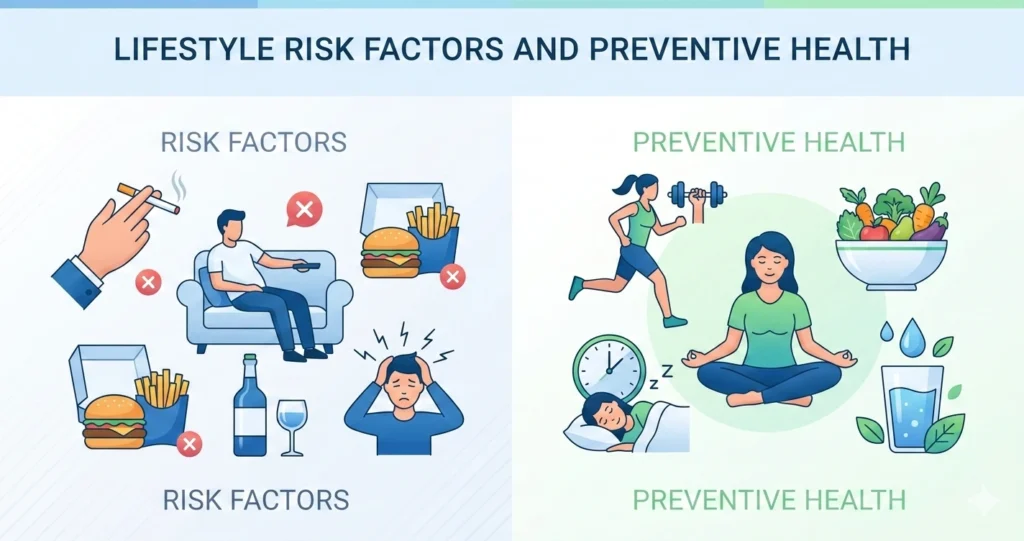
These are called lifestyle risk factors for health. According to the World Health Organization, lifestyle choices such as poor diet, physical inactivity, smoking, and excessive alcohol consumption contribute to many chronic diseases.
Common lifestyle risk factors include:
These factors increase the risk of health conditions such as heart disease, diabetes, obesity, and high blood pressure.
The good news is that these risks can often be reduced through healthy lifestyle changes. Even small improvements can create long-term benefits for your body and mind.
i). Move Your Body Every Day
Regular physical activity is one of the most effective ways to improve health. Many people assume they need intense workouts or gym memberships, but simple daily movement can make a big difference.
Research from the Centers for Disease Control and Prevention shows that regular exercise improves heart health, strengthens muscles, and helps maintain a healthy weight.
You do not need complicated routines. Simple activities can help you stay active:

These simple habits for a healthier life help improve circulation, increase energy levels, and reduce stress.
Physical activity also supports mental health. Studies published by health organizations show that regular exercise can reduce anxiety and improve mood by releasing endorphins.
If you spend long hours sitting, try setting reminders to stand up or walk every hour. Small steps like these are powerful quick tips for better health that are easy to follow.
ii). Improve Your Daily Eating Habits
Food plays a major role in overall health. Unfortunately, modern diets often contain too many processed foods, sugars, and unhealthy fats.
Making healthy lifestyle changes in your diet does not mean following strict or extreme diets. Instead, focus on balanced nutrition.
According to Healthline and other health sources, a healthy diet generally includes: Fruits, Vegetables, Whole grains, Lean proteins, Healthy fats and Plenty of water.
Try replacing highly processed foods with natural alternatives whenever possible. For example:
- Choose fresh fruit instead of sugary snacks
- Replace white bread with whole grains
- Drink water instead of sugary drinks
- Add vegetables to most meals
These changes may seem small, but they are powerful ways to reduce health risks naturally. Eating balanced meals helps control blood sugar, maintain healthy weight, and support the immune system.
Another helpful habit is mindful eating. Eating slowly and paying attention to hunger signals can prevent overeating and improve digestion. Nutrition does not need to be perfect every day. Consistency matters more than strict rules.

iii). Prioritize Quality Sleep
Sleep is often ignored when people think about health. However, poor sleep is one of the most common lifestyle risk factors for health.
Adults typically need about seven to nine hours of sleep per night. When sleep is consistently disrupted, it can affect mood, energy levels, and long-term health.
Research referenced by WebMD explains that sleep supports many important body functions, including memory, immune system health, and hormone balance.
Poor sleep habits may lead to increased stress, Reduced concentration, Weight gain and Higher risk of heart diseases.
Improving sleep does not require complicated changes. A few simple habits for a healthier life can make a big difference:
Even small adjustments in sleep routines can help restore energy and improve overall well-being. When combined with other healthy lifestyle changes, good sleep supports both physical and mental health.
iv). Manage Stress in Healthy Ways
Stress is a natural part of life, but chronic stress can seriously impact health. Long-term stress affects the body’s hormones and can increase the risk of heart disease, anxiety, and depression.
Learning how to reduce health risks naturally often involves improving stress management.
Fortunately, stress can be reduced with simple daily practices. You do not need complicated techniques to relax your mind.

Some effective quick tips for better health include:
Meditation and mindfulness are also widely recommended by health experts. These practices help calm the mind and improve emotional balance. Even five to ten minutes of quiet breathing or relaxation can lower stress levels.
Another powerful strategy is maintaining a balanced schedule. Avoid overloading your day with too many tasks. Giving yourself time to rest is an important part of healthy lifestyle changes. When stress becomes manageable, it improves sleep, focus, and overall health.
3. Creating Simple Habits for a Healthier Life
Many people believe they must completely change their routines to become healthier. In reality, small consistent habits often lead to the biggest improvements.
Start with manageable goals rather than drastic changes.
Examples of easy habits include:
These small routines gradually replace unhealthy habits. Over time, they help reduce lifestyle risk factors for health and improve quality of life.
The key is consistency. Even small positive actions repeated daily can transform your health over months and years. Remember that improving health is a long-term journey, not a short-term project.


4. References
5. The Bottom Line
Improving your health does not require dramatic lifestyle changes. Often, the most effective improvements come from small daily habits.
By moving your body regularly, improving your diet, prioritizing quality sleep, and managing stress, you can significantly improve your well-being. These simple steps address common lifestyle risk factors for health and show how to reduce health risks naturally.
The best part is that these strategies are easy to begin today. Even a few quick tips for better health can lead to long-term improvements when practiced consistently.
Start with one small habit, build momentum, and gradually create lasting healthy lifestyle changes that support a healthier and happier life.
Frequently Asked Questions

Cholesterol and Heart Health: 5 Symptoms You Shouldn’t Ignore
Cholesterol and Heart Health: 5 Symptoms You Shouldn’t Ignore 1. Introduction Cholesterol and Heart Health…

5 Therapy Types That Help Meningitis survivors Heal Mentally
5 Therapy Types That Help Meningitis survivors Heal Mentally 1. Introduction Surviving meningitis changes more…

Digital Hangover: How Screen Time Impacts Mental Health
Digital Hangover: How Screen Time Impacts Mental Health 1. Introduction In today’s always-connected world, many…
Medical Disclaimer: The Website does not provide medical, clinical, or healthcare advise services. The content should not be relied upon as medical advice. Always seek the guidance of a qualified physician, healthcare provider, or medical professional with any questions you may have regarding a medical condition, treatment, or health decision. Never disregard professional medical advice or delay seeking it because of information found on this Website.