
Evans Formula in Burn Care with Calculator
The Evans Formula estimates fluid resuscitation for burn victims using body weight and burn percentage, prescribing colloids, electrolytes, and glucose.
1. Introduction – Evans Formula
The Evans Formula remains one of the earliest structured methods for calculating fluid replacement in burn patients. Proper fluid therapy prevents shock, protects organs, and improves survival. In this guide, you will understand how it works, when to use it, and how it compares with modern formulas.
Burn shock occurs due to massive fluid shifts. Therefore, early and precise calculation of fluid needs becomes critical within the first 24 hours.
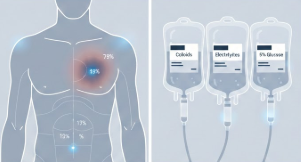
2. Why Early Fluid Therapy Matters – Evans Formula
Severe burns increase capillary permeability. As a result, plasma leaks into surrounding tissues. Blood volume drops quickly, which may lead to hypovolemic shock. Timely Fluid Resuscitation restores circulating volume. Moreover, it supports oxygen delivery and stabilizes vital organs.
Delays in therapy can increase mortality, which can be assessed by Baux Score Calculator and Abbrevieted Burn Severity Index. Hence, structured formulas help clinicians avoid under- or over-resuscitation.
3. Evans Formula: Concept and Background
The Evans Formula was introduced in the 1950s as a guideline for burn resuscitation. It calculates fluid requirements based on body weight and percentage of total body surface area (TBSA) burned.
Evans Formula History Timeline
History of Evans Formula for Burn Resuscitation
1940s
Dr. Evans developed an early structured approach to fluid resuscitation in burn shock.
1947
Evans Formula published: crystalloids + colloids calculated by body weight and TBSA burned.
1960s
Research refined burn shock management and improved fluid therapy understanding.
1968
Parkland Formula introduced, becoming widely adopted in burn resuscitation.
Modern Era
Evans Formula remains historically significant in burn care evolution.
The formula recommends:
Half of the total volume is given in the first 8 hours. The remaining half is administered over the next 16 hours. This structured approach makes the Evans Formula easy to apply in emergency settings.
4. How Evans Formula Works in Practice
Step 1: Estimate TBSA
Clinicians first estimate burn size using the Rule of Nines.
Step 2: Patient Details
Weight: 60 kg
Burn Area: 30% TBSA
Fluid Calculation
Crystalloids = 1 × 60 × 30 = 1800 ml
Colloids = 1 × 60 × 30 = 1800 ml
Dextrose = 2000 ml
Total Fluid (24 Hours)
Total = 5600 ml
Half (2800 ml) infused in the first 8 hours.
5. Monitoring and Ongoing Assessment
Calculation is only the beginning. Continuous monitoring ensures adequate perfusion. Doctors assess:
Urine output remains the most reliable bedside indicator. Therefore, adjustments should follow patient response rather than fixed numbers.
Excessive fluids may cause pulmonary edema, abdominal compartment syndrome, and delayed wound healing. On the other hand, insufficient fluids worsen tissue hypoxia. Therefore, clinicians must individualize therapy and avoid rigid dependence on calculated values alone.
6. Evans vs Parkland vs Galveston Comparison
Fluid formulas have evolved. Below is a simplified Evans vs Parkland vs Galveston comparison in a table for clarity.
| Formula | Fluid Type | Calculation Basis | Colloid Use | Special Feature |
|---|---|---|---|---|
| Evans Formula | Crystalloid + Colloid + Dextrose | 1 ml/kg/% TBSA (each) | Yes | Includes maintenance glucose |
| Parkland | Crystalloid only | 4 ml/kg/% TBSA | No (first 24 hrs) | Widely used globally |
| Galveston | Pediatric-focused | 5000 ml/m² TBSA + 2000 ml/m² | No early colloid | Designed for children |
The Evans Formula differs because it combines crystalloids and colloids from the beginning. However, modern trends often delay colloid use.
7. Fluid Volume Comparison (30% Burn, 60 kg Adult)
Below is a simple analytical comparison of total 24-hour fluid estimates:
Fluid Volume Comparison (24 Hours)
This comparison shows that the Evans Formula typically results in lower total volume than Parkland in similar scenarios.
8. Advantages of Evans Formula
The Evans Formula offers several benefits. Moreover, it provides structured guidance in resource-limited settings.
9. Limitations and Modern Perspective
Despite its strengths, the Evans Formula has limitations. Research shows that aggressive colloid use in the first 24 hours may not always improve outcomes.
Additionally, modern burn centers prefer goal-directed therapy rather than strict adherence to any single formula. However, understanding the Evans Formula helps clinicians appreciate the evolution of burn management.
10. Latest Research on Burn Fluid Resuscitation
Bert et al. compared microvascular effects of different resuscitation approaches (Parkland vs Evans) and showed that Evans Formula (low fluid + high protein/colloid) results in less interstitial fluid accumulation than Parkland in theoretical models.
11. Practical Clinical Tips
When using the Evans Formula, remember:
- Recalculate fluids if burn size estimation changes
- Adjust rates based on urine output
- Avoid fluid creep
- Monitor for compartment syndrome
Furthermore, combine clinical judgment with protocol-based care.
“In burn resuscitation, formulas guide the start, but patient response determines the finish.”
12. The Bottom Line
The Evans Formula remains a historically important and clinically relevant method for early burn resuscitation. Although newer approaches emphasize individualized therapy, this formula provides a strong foundation for understanding fluid replacement principles.
By combining calculation, careful monitoring, and evidence-based adjustments, clinicians can optimize outcomes in severe burn injuries. Ultimately, structured methods like the Evans Formula continue to shape safe and effective burn care worldwide.
13. Frequently Asked Questions
Evans Formula is a historical burn fluid resuscitation method using crystalloids, colloids, and glucose to calculate 24-hour fluid requirements based on patient weight and %TBSA burned.
Total fluid = (Crystalloids: 1 ml × kg × %TBSA) + (Colloids: 1 ml × kg × %TBSA) + 2000 ml glucose over 24 hours.
Half of the total calculated fluid is given in the first 8 hours post-burn; the remaining half is administered over the next 16 hours.
Colloids in Evans Formula help maintain intravascular volume and reduce interstitial edema compared to crystalloids alone.
It is intended for adults with burns >15–20% TBSA. Pediatric formulas differ, and modern practice often uses modified formulas.
TBSA (Total Body Surface Area) is commonly estimated using the Rule of Nines or Lund-Browder chart for more accurate calculation.
Evans Formula is mostly historical; modern practice favors Parkland or modified Brooke formulas, often using calculators to avoid over-resuscitation.
Under-resuscitation may lead to shock and organ failure; over-resuscitation can cause edema, compartment syndrome, and pulmonary complications.
Yes, clinicians may adjust colloid/crystalloid ratios or total volumes based on patient condition, burn depth, and urine output.
Yes, modern burn care often uses Evans or Parkland formula calculators to reduce errors and speed up fluid resuscitation decisions.


Benefits of Garlic: Fight Cancer & Boost Health
Benefits of Garlic: Fight Cancer & Boost Health 1. Introduction The Benefits of Garlic have…

How Physical Activity Helps Reduce LDL Cholesterol Naturally
How Physical Activity Helps Reduce LDL Cholesterol Naturally High LDL cholesterol silently damages your arteries…

5 Simple ways to Know You are Overweight to Act Early
5 medically accepted ways to know if you are overweight Determining whether you are overweight…
Medical Disclaimer: The Website does not provide medical, clinical, or healthcare advise services. The content should not be relied upon as medical advice. Always seek the guidance of a qualified physician, healthcare provider, or medical professional with any questions you may have regarding a medical condition, treatment, or health decision. Never disregard professional medical advice or delay seeking it because of information found on this Website.
For Nutrition Tips Click Here