
5 medically accepted ways to know if you are overweight

Determining whether you are overweight is not always simple. Many people rely only on a weighing scale. However, health professionals use several measurements to check body composition and health risks. These methods give a clearer picture of how excess body fat affects your health. As a result, you can make smarter choices to stay healthy.rovide a more accurate picture of how excess body fat affects your health, allowing you to make better-informed decisions about your well-being.
Why These Measurements Matter
Using more than one indicator gives a clearer picture of your weight-related health risks than relying on just one method. Also, fat distribution, body composition, and waist size strongly affect long-term health. Finally, if any of these methods show that you are overweight, a healthcare professional can help you create a safe and effective plan to improve your health.
Below are five widely recognized medical indicators used to assess overweight status.
1. Body Mass Index (BMI) – Check Overweight range
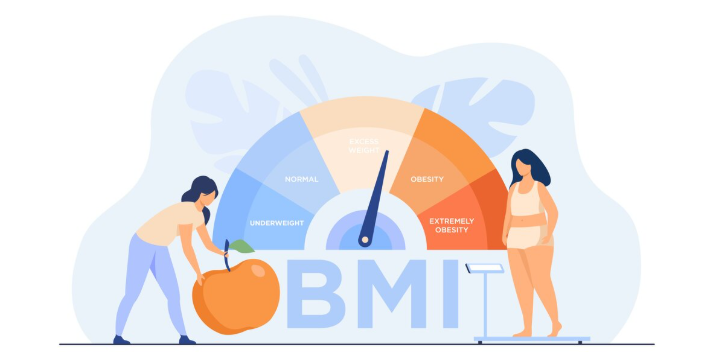
Body Mass Index (BMI) is a widely used clinical screening tool that helps assess whether an individual’s weight falls within a healthy range for their height. It is calculated by dividing weight in kilograms by the square of height in meters (kg/m²). While BMI does not directly measure body fat, it remains a valuable first-step indicator in identifying potential weight-related health risks.
BMI Classification (Adults):
- Underweight: Below 18.5
- Normal weight: 18.5 – 24.9
- Overweight: 25.0 – 29.9
- Obesity: 30.0 and above
If your BMI falls within the 25–29.9 range, you are classified as overweight. This range suggests an increased risk of developing chronic conditions such as type 2 diabetes, hypertension, cardiovascular disease, and metabolic syndrome. However, it’s important to interpret BMI alongside other clinical factors like waist circumference, muscle mass, age, and overall lifestyle.
Why BMI Matters
Being overweight doesn’t always mean immediate health problems, but it signals a higher likelihood of future complications if no action is taken. Excess body weight, especially around the abdomen, is linked to insulin resistance and inflammation, both of which can negatively impact long-term health.
Limitations of BMI
BMI may not accurately reflect body composition in athletes, elderly individuals, or those with high muscle mass. Therefore, healthcare professionals often combine BMI with additional assessments such as body fat percentage, diet evaluation, and physical activity levels.
What You Can Do
If your BMI is in the overweight range, consider adopting gradual lifestyle changes:
- Balanced, nutrient-rich diet
- Regular physical activity (at least 150 minutes per week)
- Adequate sleep and stress management
Consulting a healthcare provider or nutritionist can help create a personalized, sustainable plan. Early intervention is key to preventing progression to obesity and reducing long-term health risks.
2. Waist-to-Hip Ratio (WHR)– Overweight Criteria
Waist-to-Hip Ratio (WHR) is a clinically important measurement used to assess fat distribution in the body. Unlike Body Mass Index (BMI), which evaluates overall weight, WHR focuses on where fat is stored—particularly around the abdomen. Central (abdominal) fat is strongly associated with a higher risk of metabolic and cardiovascular diseases.
How to Calculate WHR
WHR is calculated by dividing waist circumference by hip circumference:
WHR = Waist (cm) ÷ Hip (cm)
- Measure your waist at the narrowest point (usually above the navel)
- Measure your hips at the widest part of the buttocks
WHR Overweight Risk Criteria:
According to global health guidelines:
For Men:
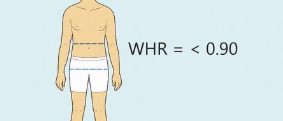
- Low risk: Below 0.90
- Moderate (Overweight risk): 0.90 – 0.99
- High risk (Obesity-related): 1.0 and above
For Women:
- Low risk: Below 0.80
- Moderate (Overweight risk): 0.80 – 0.84
- High risk (Obesity-related): 0.85 and above
If your WHR falls within the moderate range, it indicates excess abdominal fat and an increased risk of conditions such as type 2 diabetes, heart disease, and hormonal imbalances—even if your BMI appears normal.
Why WHR Matters More Than Weight Alone
Research shows that fat stored around internal organs (visceral fat) is more dangerous than fat stored under the skin. A higher WHR reflects this harmful fat distribution, making it a more reliable predictor of cardiometabolic risk than weight alone.
Clinical Limitations
WHR may vary with age, ethnicity, and body structure. It should be used alongside other measures like BMI, waist circumference, and overall lifestyle assessment for accurate risk evaluation.
Improving Your WHR
- Engage in regular aerobic and strength training exercises
- Reduce intake of refined sugars and processed foods
- Manage stress and improve sleep quality
Small, consistent lifestyle changes can significantly reduce abdominal fat and improve long-term health outcomes.
3. Waist-to-Height Ratio (WHtR)
Waist-to-Height Ratio (WHtR) is an evidence-based screening tool that evaluates central obesity by comparing waist circumference to height. It is increasingly recommended by clinicians because it better reflects abdominal fat, a key driver of cardiometabolic risk, than weight-based measures alone.
How to Calculate WHtR
WHtR is calculated using a simple formula:
WHtR = Waist Circumference (cm) ÷ Height (cm)
- Measure waist at the midpoint between the lower rib and iliac crest (hip bone)
- Measure height without shoes, standing upright
WHtR Risk Categories (Adults):
- Below 0.40: Underweight risk
- 0.40 – 0.49: Healthy range
- 0.50 – 0.59: Overweight (increased risk)
- 0.60 and above: High risk (central obesity)
A commonly used clinical message is: “Keep your waist less than half your height.” If your WHtR is ≥ 0.50, it indicates excess abdominal fat and a higher likelihood of developing conditions such as type 2 diabetes, hypertension, fatty liver disease, and cardiovascular disorders.
Why WHtR is Clinically Valuable
WHtR is considered superior to BMI in many cases because it directly captures fat distribution. It applies across genders and ethnic groups with a single cut-off (0.5), making it practical for public health screening and individual risk assessment.
Limitations
WHtR may be less accurate in very tall or very short individuals, children (without age-specific charts), and highly muscular individuals. Therefore, it should be interpreted alongside BMI, waist circumference, and overall clinical evaluation.
How to Improve WHtR
- Aim for gradual fat loss, especially around the abdomen
- Combine aerobic exercise with resistance training
- Prioritize whole foods, fiber, and lean protein
- Reduce sedentary time and improve sleep quality
Early identification using WHtR allows timely lifestyle intervention, helping prevent progression to obesity and reducing long-term health risks.
4. Body Fat Percentage– Overweight culprit
Body Fat Percentage (BFP) is one of the most accurate indicators of whether a person is truly overweight. Unlike Body Mass Index (BMI), which only considers height and weight, BFP measures the proportion of fat relative to total body weight—making it a more precise reflection of body composition and health risk.
What is Body Fat Percentage?
Body fat includes essential fat (needed for normal body functions) and stored fat (excess energy reserves). When stored fat becomes excessive, it increases the risk of metabolic and cardiovascular diseases.
Healthy vs Overweight Body Fat Ranges:
For Men:
- Essential fat: 2–5%
- Healthy range: 10–20%
- Overweight: 21–24%
- Obesity: 25% and above
For Women:
- Essential fat: 10–13%
- Healthy range: 18–28%
- Overweight: 29–31%
- Obesity: 32% and above
If your body fat percentage falls within the overweight range, it indicates excess fat accumulation—even if your weight appears “normal.” This condition is often referred to as “normal weight obesity” and can still carry significant health risks.
Why Body Fat Matters More Than Weight
Excess body fat, especially visceral fat around internal organs, is strongly linked to insulin resistance, inflammation, and hormonal imbalance. This increases the risk of type 2 diabetes, heart disease, fatty liver, and certain cancers.
How is Body Fat Measured?
Common methods include:
- Skinfold calipers (clinical estimate)
- Bioelectrical impedance devices (smart scales)
- DEXA scan (gold standard in clinical settings)
Reducing Excess Body Fat Safely
- Focus on fat loss, not just weight loss
- Combine strength training with cardiovascular exercise
- Maintain a high-protein, nutrient-dense diet
- Ensure adequate sleep and stress control
Clinical Insight
Even small reductions in body fat percentage can significantly improve metabolic health. Tracking BFP over time provides a clearer picture of progress than weight alone, making it a crucial metric in long-term health management and disease prevention.
5. Waist Circumference
Waist circumference is a simple yet clinically powerful measurement used to assess abdominal (central) obesity, which is strongly linked to metabolic and cardiovascular diseases. Unlike Body Mass Index (BMI), this metric directly reflects fat accumulation around vital organs—often referred to as visceral fat.
How to Measure Waist Circumference Correctly
- Stand upright and relax your abdomen
- Place a measuring tape midway between the lower rib and hip bone
- Measure after a normal exhalation, without pulling the tape too tight
Overweight Risk Cut-Off Values (Adults):
For Men:
- Normal: Less than 94 cm
- Increased risk (Overweight): 94–101 cm
- High risk (Obesity-related): 102 cm and above
For Women:
- Normal: Less than 80 cm
- Increased risk (Overweight): 80–87 cm
- High risk (Obesity-related): 88 cm and above
If your waist measurement falls within the increased risk range, it indicates excess abdominal fat and a higher likelihood of developing conditions such as type 2 diabetes, hypertension, heart disease, and metabolic syndrome.
Why Waist Circumference Matters
Fat stored around the abdomen is metabolically active and contributes to insulin resistance, inflammation, and hormonal imbalance. Even individuals with a normal BMI can have a high waist circumference, placing them at hidden risk.
Clinical Limitations
Waist circumference does not account for overall body composition or fat distribution in other areas. Factors such as age, ethnicity, and body shape can influence risk interpretation, so it should be used alongside BMI, WHR, or WHtR.
How to Reduce Waist Size Safely
- Engage in regular physical activity, especially aerobic exercise
- Follow a balanced diet low in refined sugars and processed foods
- Improve sleep patterns and manage stress
Monitoring waist circumference regularly provides a practical and cost-effective way to track health risk and take early preventive action.

The Bottom Line
Assessing overweight status requires more than just stepping on a scale. Tools like BMI, Waist-to-Hip Ratio, Waist-to-Height Ratio, Body Fat Percentage, and Waist Circumference provide a comprehensive view of body composition and fat distribution.
Among these, measurements focusing on abdominal fat offer deeper insight into metabolic and cardiovascular risk. No single method is perfect, but combining these metrics ensures more accurate health evaluation.
Early identification of overweight indicators allows timely lifestyle modifications, reducing the risk of chronic diseases. Prioritizing balanced nutrition, regular exercise, and consistent monitoring is essential for maintaining long-term health and preventing obesity-related complications.
Table Of Contents
- Top 10 Hidden Health Risks You Shouldn’t Ignore in 2026 (Early Signs & Prevention Guide)Top 10 Hidden Health Risks You Shouldn’t Ignore in 2026 (Early Signs & Prevention Guide) Introduction In today’s fast-changing world, many serious conditions develop quietly without obvious symptoms. These Hidden Health Risks often remain undetected… Read more: Top 10 Hidden Health Risks You Shouldn’t Ignore in 2026 (Early Signs & Prevention Guide)
- Benefits of Garlic: May Fight Cancer & Boost HealthBenefits of Garlic: May Fight Cancer & Boost Health 1. Introduction “Garlic has been used medicinally for centuries. Modern research suggests it may help reduce the risk of certain cancers, including stomach, colorectal, and esophageal cancers. It… Read more: Benefits of Garlic: May Fight Cancer & Boost Health
- How Physical Activity Helps Reduce LDL Cholesterol NaturallyHow Physical Activity Helps Reduce LDL Cholesterol Naturally High LDL cholesterol silently damages your arteries without warning. However, the good news is that simple daily exercise like walking or swimming can naturally reverse this risk.… Read more: How Physical Activity Helps Reduce LDL Cholesterol Naturally


Top 10 Hidden Health Risks You Shouldn’t Ignore in 2026 (Early Signs & Prevention Guide)
Top 10 Hidden Health Risks You Shouldn’t Ignore in 2026 (Early Signs & Prevention Guide)…

Benefits of Garlic: May Fight Cancer & Boost Health
Benefits of Garlic: May Fight Cancer & Boost Health 1. Introduction “Garlic has been used…

How Physical Activity Helps Reduce LDL Cholesterol Naturally
How Physical Activity Helps Reduce LDL Cholesterol Naturally High LDL cholesterol silently damages your arteries…
Medical Disclaimer: The Website does not provide medical, clinical, or healthcare advise services. The content should not be relied upon as medical advice. Always seek the guidance of a qualified physician, healthcare provider, or medical professional with any questions you may have regarding a medical condition, treatment, or health decision. Never disregard professional medical advice or delay seeking it because of information found on this Website.
s