
Worried About Breast Cancer? Check Your Risk & What to Do Next
Breast cancer risk assessment helps estimate your likelihood of developing breast cancer based on factors like age, family history, lifestyle, and genetics, enabling early detection, informed screening decisions, and better preventive care.
Breast Cancer Risk Assessment
Based on the Gail Model (NCI Tool): Answer these quick questions to understand your current risk level and what steps you should take next.
Your Risk Assessment Results
5-Year Risk
–%
Probability within next 60 months
Lifetime Risk
–%
Probability up to age 90
Note: The Gail model may underestimate risk for women with a strong family history of breast or ovarian cancer (BRCA1/2) or those who have had radiation therapy to the chest.
Medical Disclaimer: This tool is not a diagnosis. It only estimates your risk based on common factors. Always consult a doctor for medical advice.
What Gail Model for Breast Cancer Risk Assessment Measures?
The Gail Model is a statistical method used to estimate a woman’s risk of developing Breast Cancer over a 5-year period and throughout her lifetime. It helps clinicians identify individuals at higher risk and guide preventive strategies.
Key factors measured in the Gail Model include:
- Age of the woman
- Age at first menstrual period (menarche)
- Age at first live childbirth
- Number of first-degree relatives with breast cancer
- Personal history of breast biopsies
- Presence of atypical hyperplasia in biopsy samples
- Race or ethnicity (to refine risk estimates)
These factors are commonly used in clinical tools like the Gail Model. The model generates a numerical risk percentage, which can guide decisions about screening or preventive care. However, it has limitations, as it does not include certain strong risk factors like BRCA gene mutations or detailed family history beyond close relatives.
Who should take this Test?
The Gail Model is designed for specific groups of women to estimate their risk of developing Breast Cancer. It is most useful when applied to individuals without a known strong genetic predisposition. In practice, many patients who consider themselves “low risk” still benefit from routine screening, especially after age 40. Risk tools are helpful, but they should never replace clinical evaluation.
Like, A 42-year-old woman with family history may fall into moderate risk and benefit from early screening.
According to World Health Organization, early detection significantly improves breast cancer survival rates.
Who should consider taking this test:
- Women aged 35 years and older, as the model is validated mainly for this age group
- Women with a personal history of benign breast conditions, such as previous breast biopsies
- Those with a family history of breast cancer in first-degree relatives (mother, sister, or daughter)
- Women seeking preventive care guidance, including decisions about screening or medications
- Individuals with reproductive risk factors, such as early menarche or late first childbirth
- Women without known BRCA1 or BRCA2 mutations, as the model does not fully account for genetic syndromes
Who may not benefit as much:
- Women with a strong hereditary cancer history or known genetic mutations
- Women under 35 years of age
- Those with prior diagnosis of breast cancer
Overall, the Gail Model is best suited for average-risk women who want a structured, evidence-based estimate of their future breast cancer risk.
How to Interpret your Results?
Your result helps guide screening decisions—not confirm disease.
| Risk Percentage (5-year) | Interpretation | Suggested Action |
|---|---|---|
| < 1% | Low risk | Routine screening and healthy lifestyle |
| 1% – 1.66% | Average risk | Regular mammograms as per guidelines |
| ≥ 1.67% | Increased/high risk | Consider enhanced screening or prevention |
| Very high (lifetime >20%) | Strong risk | Genetic counseling, intensive monitoring |
The National Cancer Institute also recommends risk-based screening strategies.
Key points for interpretation:
- Results show probability, not certainty, of developing cancer
- Higher percentages indicate greater need for preventive care
- Compare your risk with average women of similar age
- Helps guide screening frequency and medical decisions
- Should be interpreted by a healthcare professional
- Does not include genetic mutations (e.g., BRCA1/BRCA2)
- Useful mainly for women without strong family history
If this assessment is causing stress, learn about coping with health anxiety.
What to do Next with Results?
Early detection significantly improves outcomes.
- Consult a doctor: Discuss your risk score with a healthcare professional for proper interpretation
- Follow screening guidelines:
- Low risk → routine mammograms and self-awareness
- Moderate risk → regular clinical exams and imaging
- High risk → earlier and more frequent screening (e.g., MRI, mammography)
- Consider preventive strategies: Lifestyle changes like healthy diet, exercise, limiting alcohol, and avoiding smoking
- Medication options: High-risk individuals may consider chemoprevention (e.g., tamoxifen) under medical advice
- Genetic counseling: If strong family history exists, testing for BRCA mutations may be recommended
- Stay informed: Monitor any breast changes and report symptoms promptly
These steps help reduce risk, support early detection, and improve outcomes through timely medical care and preventive action.
What are the Real Risk Factors- Explained.
Risk increases with age and genetic factors
Key Breast Cancer Risk Factors
- Family history
- Age
- Hormonal exposure
- Breast density
- Lifestyle
What are the Limitations of this Test?
The Gail Model is widely used, but it has several important limitations when estimating risk for Breast Cancer.
Key limitations include:
- Limited genetic consideration: It does not account for high-risk mutations such as BRCA1 or BRCA2, which significantly increase cancer risk
- Restricted family history: Only first-degree relatives are included; extended family history is ignored
- Not suitable for all populations: Originally developed using data from primarily Western populations, so accuracy may vary in other ethnic groups
- Excludes lifestyle factors: Important influences like diet, physical activity, alcohol use, and obesity are not included
- Underestimates risk in high-risk women: Particularly those with strong hereditary cancer syndromes
- Over-simplification: Uses a limited number of variables, which may not capture the full complexity of breast cancer risk
- Not applicable to certain groups: Less reliable for women under 35 years or those with previous breast cancer
- No prediction of cancer type: It estimates risk but cannot determine severity or subtype
Overall, while useful for general risk estimation, the Gail Model should be combined with clinical judgment and other assessment tools for accurate decision-making.
The Bottom Line
In conclusion, the Gail Model is a valuable and practical tool for estimating a woman’s risk of developing Breast Cancer, particularly among average-risk populations. It helps guide decisions related to screening, prevention, and clinical care. However, its limitations—such as exclusion of genetic factors and detailed family history—mean it should not be used in isolation.
Instead, results must be interpreted alongside clinical evaluation and individual risk factors. When used appropriately, the Gail Model supports early detection strategies and promotes informed healthcare decisions, ultimately contributing to better outcomes and awareness.
References
Recent research presented by the Radiological Society of North America found that artificial intelligence models can predict a woman’s five-year breast cancer risk more accurately than traditional indicators such as breast density alone.
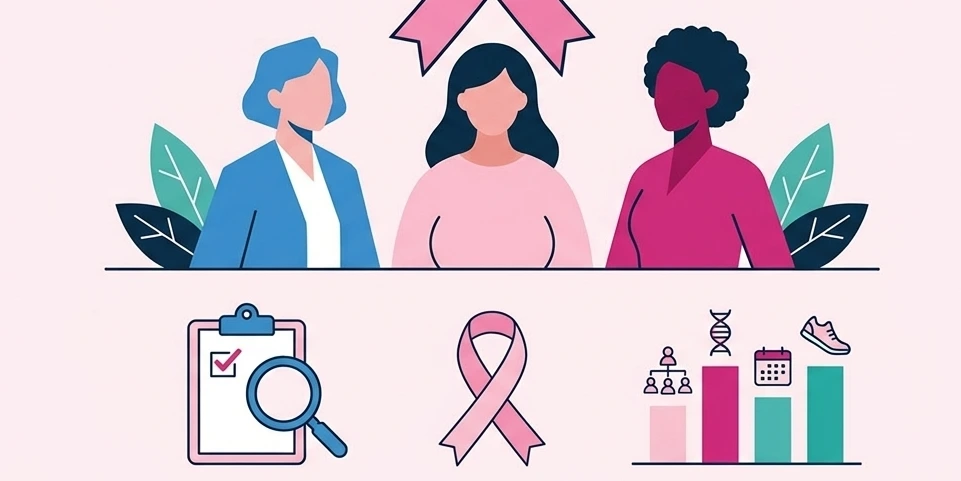
The study analyzed over 245,000 mammograms and showed that women classified as high-risk by the AI model had more than four times higher cancer incidence than those at average risk. Researchers suggest AI-based risk tools could improve personalized screening and early detection strategies.


Top 10 Hidden Health Risks You Shouldn’t Ignore in 2026 (Early Signs & Prevention Guide)
Top 10 Hidden Health Risks You Shouldn’t Ignore in 2026 (Early Signs & Prevention Guide)…

Benefits of Garlic: May Fight Cancer & Boost Health
Benefits of Garlic: May Fight Cancer & Boost Health 1. Introduction “Garlic has been used…

How Physical Activity Helps Reduce LDL Cholesterol Naturally
How Physical Activity Helps Reduce LDL Cholesterol Naturally High LDL cholesterol silently damages your arteries…
Medical Disclaimer: The Website does not provide medical, clinical, or healthcare advise services. The content should not be relied upon as medical advice. Always seek the guidance of a qualified physician, healthcare provider, or medical professional with any questions you may have regarding a medical condition, treatment, or health decision. Never disregard professional medical advice or delay seeking it because of information found on this Website.