
7 Shocking Lifestyle Risk Factors You Must Avoid Today
- 7 Shocking Lifestyle Risk Factors You Must Avoid Today
- 1. Introduction: What Are Lifestyle Risk Factors?
- 2. Why Lifestyle Risk Factors Play a Vital Role in Preventive Health?
- 3. Recent Research on Lifestyle Risk Factors
- 4. Lifestyle Risk Factors: Overview
- Factor 1: Smoking & Tobacco Use
- Factor 2: Poor Nutrition Habits
- Factor 3: Physical Inactivity
- Factor 4: Elevated Bad Cholesterol (LDL)
- Factor 5: Excessive Alcohol Consumption
- Factor 6: Poor Sleep Patterns
- Factor 7: Chronic Stress & Mental Health Strain
- 5. Gen Z and Lifestyle Choices
- 6. Preventive Measures to Lower Lifestyle Risk Factors
- 7. The Bottom Line: Take Control of Your Health Today
- Frequently Asked Questions
1. Introduction: What Are Lifestyle Risk Factors?
Lifestyle choices play a crucial role in shaping our overall health and longevity. Lifestyle risk factors are habits, behaviors, or conditions that increase the chance of developing serious health issues such as heart disease, diabetes, obesity, and even certain cancers. These risks can develop gradually, often unnoticed until severe health complications arise.
For example, someone who smokes casually, eats processed foods, or leads a sedentary lifestyle might feel fine today, but over years, these risks accumulate and impact health outcomes. Therefore, awareness and proactive measures are key to reducing these risks.
According to the World Health Organization, over 60% of premature deaths worldwide are linked to lifestyle-related risk factors, including poor diet, tobacco use and physical inactivity. (WHO Lifestyle Facts)
Small, consistent lifestyle changes can have a major cumulative effect. Simple modifications in daily habits often prevent chronic diseases, reduce stress on the heart, and enhance mental well-being over time.
2. Why Lifestyle Risk Factors Play a Vital Role in Preventive Health?
Preventive health focuses on stopping diseases before they begin. When individuals recognize lifestyle risks early, they can make small yet powerful changes that protect their health for years to come. For example, regular physical activity improves heart health, while balanced nutrition helps control weight, blood pressure, and cholesterol levels.
Healthcare experts emphasize that many chronic illnesses are strongly linked to lifestyle behaviors. Therefore, addressing these habits can significantly reduce the burden of heart disease, diabetes, obesity, and certain cancers.
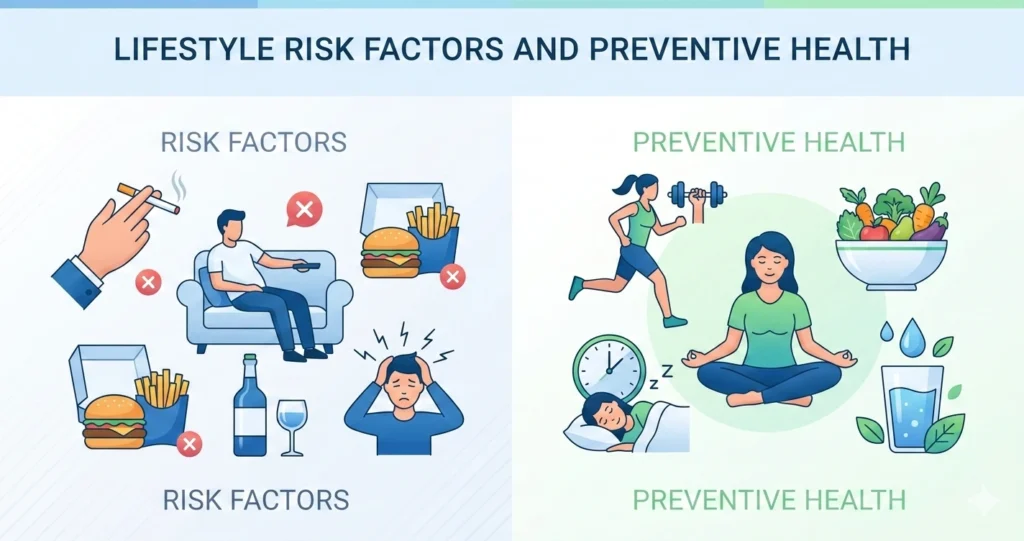
🚭 Smoking avoidance: Reduces risk of lung disease and cancer.
🥗 Healthy nutrition: Supports immunity and metabolic health.
🏃 Regular physical activity: Strengthens the heart and muscles.
😴 Quality sleep: Helps regulate hormones and mental health.
🧘 Stress management: Improves emotional and physical well-being.
By focusing on healthy daily habits, individuals can prevent many illnesses before they develop. In simple terms, preventive health begins with smarter lifestyle choices
3. Recent Research on Lifestyle Risk Factors
Recent studies highlight the alarming impact of lifestyle choices on public health. A 2024 analysis published in BMC Public Health emphasizes that smoking, poor diet, lack of exercise, and high LDL cholesterol are major predictors of mortality in adults. The study also found that individuals combining multiple risk factors were up to three times more likely to develop cardiovascular disease.
This research reinforces the importance of monitoring daily habits, adopting preventive measures, and utilizing tools like LDL calculators to make informed decisions. Moreover, interventions that address multiple lifestyle factors simultaneously produce better health outcomes than addressing each in isolation.
4. Lifestyle Risk Factors: Overview
Here’s representation of common lifestyle risks and their impact:
This graph shows how each risk contributes to chronic diseases, emphasizing the need for comprehensive preventive measures.
Factor 1: Smoking & Tobacco Use
Smoking is one of the most well-known lifestyle risk factors, yet millions continue the habit. Tobacco contains harmful chemicals that damage nearly every organ in the body. Long-term effects include:
- Lung cancer
- Heart disease
- Stroke
- Chronic obstructive pulmonary disease (COPD)
Tips to quit smoking:
- Seek counseling or support groups
- Use nicotine replacement therapies
- Avoid triggers and situations that prompt smoking
Even secondhand smoke increases the risk of heart disease in non-smokers. Quitting smoking, even later in life, dramatically improves life expectancy and reduces disease risk.
Factor 2: Poor Nutrition Habits
Unhealthy diets are a leading cause of preventable diseases. Processed foods, sugary beverages, high salt, and trans fats contribute to obesity, diabetes, high cholesterol, and metabolic syndrome.
Daily Habits for Better Nutrition
- Replace sugary drinks with water or herbal teas
- Include 5+ servings of fruits and vegetables daily
- Choose whole grains over refined grains
- Incorporate lean proteins and healthy fats
According to a 2023 study in Journal of Nutrition Research, “A diet high in processed foods is strongly correlated with increased LDL levels and cardiovascular risk.”
Factor 3: Physical Inactivity
Sedentary behavior is a silent killer. Adults who sit for prolonged periods experience higher risks of obesity, diabetes, cardiovascular diseases, and poor mental health.
How to Stay Active:
30–60 minutes of moderate activity daily
Include strength training 2–3 times per week
Take short walking breaks every hour
Practice flexibility exercises like yoga
Even small activity bursts throughout the day significantly improve health outcomes, especially when combined with better nutrition.
Factor 4: Elevated Bad Cholesterol (LDL)
High LDL cholesterol is a hidden risk factor for heart disease and stroke. Using the Martin Hopkins LDL Calculator helps people accurately estimate their LDL levels, track progress, and adopt targeted interventions.
Step-by-Step LDL Monitoring
Early detection and lifestyle adjustments such as diet, exercise, and medication can prevent serious cardiovascular events.
Monitoring & Assessment Tips
Try More Calculators
Over-reliance on calculators without medical consultation may cause anxiety or misinterpretation. Always review results with a healthcare professional.
Factor 5: Excessive Alcohol Consumption
Alcohol is widely consumed across many cultures, yet excessive drinking can have serious consequences for overall health. When consumed in large amounts over a long period, alcohol places significant stress on vital organs such as the liver, heart, pancreas, and brain. Over time, these effects can develop into chronic diseases that reduce quality of life and increase the risk of premature death.
The liver is particularly vulnerable because it is responsible for breaking down alcohol in the body. Continuous heavy drinking can lead to inflammation and permanent damage known as liver cirrhosis. Moreover, alcohol can weaken the heart muscle, disrupt normal blood pressure levels, and increase the risk of cardiovascular problems. In addition, alcohol affects the pancreas, which plays a key role in digestion and blood sugar regulation.
Medical research has also linked long-term alcohol misuse to several types of cancer, including cancers of the liver, mouth, throat, and breast. These risks become higher when alcohol consumption is combined with other unhealthy lifestyle habits such as smoking or poor diet.
⚠️ Long-Term Health Risks
- Liver cirrhosis: Permanent liver damage caused by chronic alcohol use.
- Heart disease: Increased risk of hypertension, stroke, and cardiomyopathy.
- Pancreatic damage: Inflammation that affects digestion and insulin production.
- Certain cancers: Higher risk of liver, throat, and breast cancers.
✅ Preventive Measures
- Limit intake to moderate levels: Up to 1 drink/ day for women and 2 for men.
- Track consumption: Use health or habit-tracking apps to monitor drinking patterns.
- Choose healthier alternatives: Replace alcoholic drinks with water, fresh juices, or herbal beverages.
By understanding these risks and practicing moderation, individuals can significantly reduce alcohol-related health problems and maintain better long-term well-being.
Factor 6: Poor Sleep Patterns
Chronic sleep deprivation can significantly affect overall health and daily functioning. When the body does not receive enough rest, important systems such as hormone regulation, immune response, and brain function begin to suffer. Lack of sleep can increase stress hormones, weaken immunity, and reduce concentration, memory, and decision-making abilities.
Over time, poor sleep habits may also raise the risk of conditions such as obesity, heart disease, and depression. Health experts recommend that adults aim for 7–9 hours of quality sleep each night.
Tips for Better Sleep:
- Maintain a consistent sleep schedule
- Limit caffeine and electronics before bedtime
- Create a dark, quiet, and cool sleep environment
- Practice relaxation techniques like deep breathing
Poor sleep is linked to obesity, diabetes, and elevated stress hormones, increasing other lifestyle risks.
Factor 7: Chronic Stress & Mental Health Strain
Stress is a natural response to challenging situations, but chronic stress can have serious effects on both physical and mental health. When stress becomes long-term, many individuals develop unhealthy coping habits such as overeating, smoking, or excessive alcohol consumption.
These behaviors can increase the risk of obesity, cardiovascular disease, and other chronic health problems. Persistent stress also raises blood pressure, weakens the immune system, and disrupts sleep patterns. Over time, it can negatively affect mood, concentration, and emotional well-being.
Managing Stress:
5. Gen Z and Lifestyle Choices
This generation has grown up in a digital world shaped by smartphones, social media, and constant online connectivity. While technology offers many opportunities for learning and communication, it has also influenced lifestyle habits that can affect long-term health.
Many Gen Z individuals spend a significant amount of time on screens for education, entertainment, and social interaction. Excessive screen time can lead to sedentary behavior, reduced physical activity, and disrupted sleep patterns. In addition, social media exposure may contribute to stress, anxiety, and unrealistic expectations about body image and lifestyle.
However, Gen Z is also known for being more health-conscious and socially aware than previous generations. Many young people actively seek information about nutrition, mental health, and sustainable living. They are more likely to discuss mental health openly and explore healthier lifestyle practices such as plant-based diets, fitness routines, and mindfulness.
Encouraging balanced habits among Gen Z is essential. Limiting screen time, staying physically active, practicing digital detox, and prioritizing mental well-being can help create a healthier lifestyle. With the right guidance and awareness, Gen Z has the potential to lead a generation focused on preventive health and long-term wellness.
6. Preventive Measures to Lower Lifestyle Risk Factors
Adopting healthy daily habits is one of the most effective ways to reduce lifestyle-related health risks and improve long-term well-being. Many chronic diseases such as heart disease, diabetes, and obesity are strongly influenced by everyday choices.
By making small but consistent changes, individuals can significantly lower their risk of developing these conditions and enhance their overall quality of life.
One of the most important steps is avoiding tobacco use. Smoking damages nearly every organ in the body and increases the risk of heart disease, lung disease, and cancer. Avoiding exposure to secondhand smoke is equally important for protecting respiratory and cardiovascular health.
Nutrition also plays a critical role in preventive health. Consuming a balanced diet rich in fruits, vegetables, whole grains, lean proteins, and healthy fats helps maintain a healthy weight, supports immunity, and regulates cholesterol levels. Regular physical activity further strengthens the heart, improves circulation, and enhances mental well-being.
- Quit smoking and avoid secondhand smoke to protect lung and heart health.
- Eat a balanced, nutrient-rich diet that includes whole foods and essential nutrients.
- Stay physically active every day through walking, exercise, or recreational activities.
- Reduce alcohol intake and follow recommended moderation guidelines.
- Prioritize quality sleep and stress management for better physical and mental health.
- Monitor health markers regularly, including blood pressure, blood sugar, and LDL cholesterol.
Taking proactive steps today can prevent many health problems in the future and support a healthier, more balanced lifestyle.
“An ounce of prevention is worth a pound of cure.” — Benjamin Franklin
7. The Bottom Line: Take Control of Your Health Today
Understanding lifestyle risk factors empowers individuals to take control of their health. By making informed daily choices — from diet and exercise to stress management and monitoring key biomarkers — anyone can drastically reduce long-term disease risk.
Start with small, actionable changes today and build sustainable habits for a healthier, longer life.
Frequently Asked Questions


Top 10 Hidden Health Risks You Shouldn’t Ignore in 2026 (Early Signs & Prevention Guide)
Top 10 Hidden Health Risks You Shouldn’t Ignore in 2026 (Early Signs & Prevention Guide)…

Benefits of Garlic: May Fight Cancer & Boost Health
Benefits of Garlic: May Fight Cancer & Boost Health 1. Introduction “Garlic has been used…

How Physical Activity Helps Reduce LDL Cholesterol Naturally
How Physical Activity Helps Reduce LDL Cholesterol Naturally High LDL cholesterol silently damages your arteries…
Medical Disclaimer: The Website does not provide medical, clinical, or healthcare advise services. The content should not be relied upon as medical advice. Always seek the guidance of a qualified physician, healthcare provider, or medical professional with any questions you may have regarding a medical condition, treatment, or health decision. Never disregard professional medical advice or delay seeking it because of information found on this Website.