
PHQ-9 Test Online (Instant Score + Depression Severity Guide)
Feeling low or unmotivated? Take this 2-minute test to check your depression level instantly.
Assessment Guide
Over the last 2 weeks, how often have you been bothered by any of the following problems?
Final Score
Clinical Recommendations
Next Steps
This is not a diagnosis. Please share these results with a licensed practitioner.

| Score Range | Severity Level |
|---|---|
| 0–4 | Minimal symptoms |
| 5–9 | Mild symptoms |
| 10–14 | Moderate symptoms |
| 15–19 | Moderately severe |
| 20–27 | Severe symptoms |
1. Introduction
PHQ-9 Test is a clinically-validated tool used to monitor depression severity that helps you understand your emotional well-being through structured, evidence-based questions. The PHQ-9 is one of the most trusted tools used worldwide to identify symptoms early and guide next steps. Millions of people struggle silently every year. However, early assessment can make a life-changing difference.
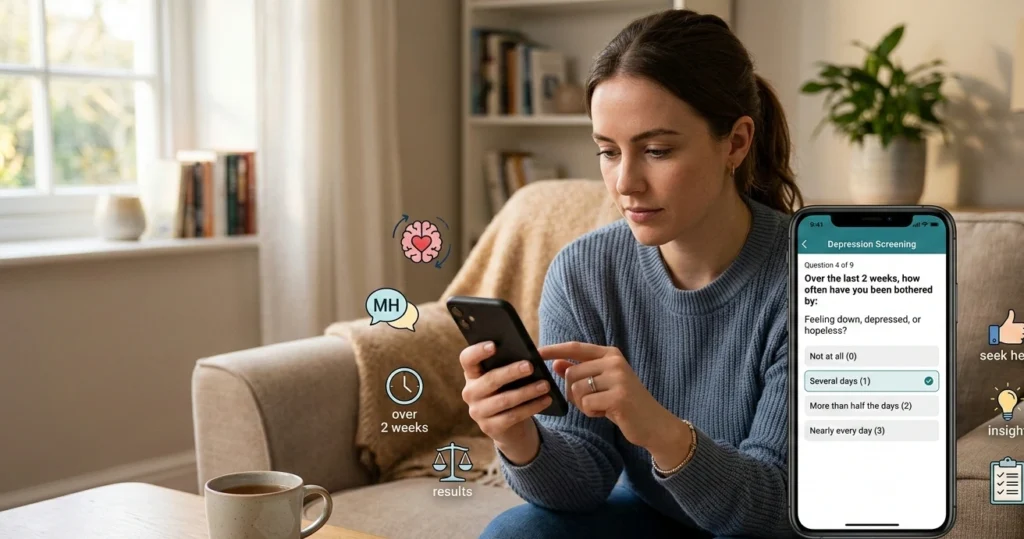
A simple screening can offer clarity, direction and hope. Early recognition allows individuals to seek support before symptoms become severe. Therefore, using a scientifically validated tool like the PHQ-9 empowers informed decisions and encourages proactive care.
Depression is often linked with anxiety. You can take the GAD-7 Anxiety Test to evaluate this.
2. What Is PHQ-9 Test for Depression Screening?
PHQ-9 Test is a short, structured assessment designed to identify symptoms of depressive disorders. Healthcare professionals widely use the PHQ-9 (Patient Health Questionnaire-9) because it is quick, reliable and easy to score.
The PHQ-9 contains nine questions based on diagnostic criteria. Each question measures how often certain symptoms have occurred over the past two weeks.
3. History of PHQ-9 Test
1950s–1970s: Clinical Interviews
Depression diagnosis relied primarily on unstructured psychiatric interviews. Clinicians used professional judgment rather than standardized tools. Early DSM editions provided guidance, but no brief self-report tool existed.
1980: DSM-III Standardization
DSM-III introduced clearer diagnostic criteria for major depressive disorder. This encouraged structured symptom-based questionnaires aligned with diagnostic standards.
1990s: Need for Primary Care Screening
Research revealed many depression cases were missed in general medical settings. Physicians required a brief, validated tool for quick completion.
1999: PHQ-9 Introduced
Robert L. Spitzer, Janet B. W. Williams and Kurt Kroenke introduced the PHQ-9. Nine items reflect DSM criteria and use a 0–3 scoring system.
2000s: Global Validation
International studies confirmed PHQ-9 reliability across cultures. Healthcare systems adopted it for clinical practice and research.
2010–Present: Digital & AI Integration
EMRs integrated PHQ-9 into visits. Telehealth expanded access and AI analytics guide personalized treatment and long-term monitoring.
4. Why the PHQ-9 Test Matters
Moreover, this tool helps bridge the gap between noticing symptoms and seeking professional guidance. If symptoms are trauma-related, try the PCL-5 PTSD Screening.
⏱ Takes Less Than 5 Minutes
Quick and simple questionnaire designed for fast completion without overwhelming the user.
✔ Evidence-Based & Validated
Scientifically tested and clinically approved for accurate depression assessment worldwide.
📊 Instant Score Interpretation
Automatically calculates results and explains severity levels immediately after completion.
🏥 Self-Check & Professional Use
Suitable for personal monitoring and widely used in primary care and mental health settings.
5. How PHQ-9 Test Works
PHQ-9 Test Symptom Rating Scale
Higher scores suggest more severe symptoms and may indicate the need for professional evaluation.
6. If you answered positively to question 9, seek professional help immediately.
Question no. 9 is Thoughts that you would be better off dead or hurting yourself?
Chronic stress can also contribute to depression—check using the PSS Stress Scale.
Try More Calculators here
7. Latest Research on Depression Screening and PHQ-9 Test
Recent research published in JAMA Network Open (2023) found that routine PHQ-9 Test in primary care significantly improved early detection and treatment outcomes. According to the study, structured screening increased follow-up care engagement by over 20%.
This research confirms that standardized tools improve both diagnosis and long-term recovery outcomes.
8. Benefits of Online PHQ-9 Test
Online tools offer convenience and privacy. In addition, they reduce stigma because users can complete assessments confidentially. Many people hesitate to seek help due to Stress, stigma, or lack of awareness. However, digital screening lowers that barrier significantly.
Key Benefits
9. PHQ-9 Test for Mental Health Monitoring
Regular Depression Screening by PHQ-9 Test allows individuals to track symptom changes over time. For example, healthcare providers often repeat the PHQ-9 during treatment to monitor progress. Tracking helps identify patterns linked to Anxiety, life events, or lifestyle changes. Consequently, patients and clinicians can adjust treatment plans effectively.
10. Monitoring and Assessment – PHQ-9 Test
While PHQ-9 Test provides valuable insight, it does not replace a clinical diagnosis. Always consult a qualified healthcare professional if symptoms persist, worsen, or include thoughts of self-harm. Early professional support significantly improves recovery outcomes.
11. Comparison: Screening vs No Screening
Below is a visual comparison showing how early screening impacts outcomes. The difference is clear. Early evaluation increases treatment engagement and improves recovery rates.
Impact of Early Screening
80%
55%
Improved treatment engagement with routine PHQ-9 use
12. When Should You Take a PHQ-9 Test?
If friends or family notice changes in your mood, screening can provide clarity. Consider taking a PHQ-9 Test if you experience:
Persistent sadness
Loss of interest in activities
Sleep disturbances
Fatigue or low motivation
14. Who Benefits Most by PHQ-9 Test?
Students
Academic pressure and social challenges increase vulnerability.
Working Adults
Career demands and burnout can impact emotional balance.
Older Adults
Life transitions may trigger mood changes.
15. How to Prepare for Depression Screening
Preparing for depression screening is simple but important for accurate results. Begin by reflecting on your recent feelings, mood, energy levels, sleep patterns and appetite changes over the past two weeks. Be honest and open—screening tools like the PHQ-9 rely on your self-reported experiences.
Write down any symptoms, medications, or major life stressors to discuss with your healthcare provider. Minimize distractions during the screening and choose a quiet, comfortable space if completing it online. Remember, there are no right or wrong answers. Accurate preparation ensures the assessment reflects your true mental state, helping guide effective support and treatment.
16. Understanding Results and Next Steps
After completing your Depression Screening, review your score carefully. combine screening results with professional evaluation for the most accurate diagnosis.
- Mild scores may require lifestyle adjustments.
- Moderate scores often benefit from counseling.
- Severe scores require professional intervention immediately.
17. Lifestyle Changes That Support Recovery
Screening identifies symptoms, but recovery involves action. Consider these supportive habits. Healthy routines reduce Stress and support long-term emotional stability.
18. Why Regular Screening Improves Outcomes
Depression often develops gradually. Therefore, consistent PHQ-9 Test helps detect subtle changes before symptoms escalate. Early identification leads to:
Healthcare systems worldwide now integrate screening into routine care because it improves overall Mental Health metrics.
19. Common Myths About PHQ-9 Test
PHQ-9 Test empowers individuals with knowledge, not judgment. It provides a measurable starting point for self-awareness, medical consultation and ongoing care planning while promoting proactive emotional health management.
20. The Bottom Line
PHQ-9 Test for Depression Screening offers a fast, reliable and accessible way to evaluate symptoms. It encourages early intervention, supports monitoring and improves treatment outcomes.
If you notice persistent emotional changes, consider taking a screening today. A few minutes of honest reflection could be the first step toward meaningful recovery and a healthier future.
Frequently Asked Questions
High sensitivity & specificity (~88%)
Based on DSM criteria
Author:
Related Mental Health Tests
- GAD-7 Anxiety Test
- PHQ-9 Depression Test
- Perceived Stress Scale (PSS)
- PTSD Test (PCL-5)
No post found!
Medical Disclaimer: The Website does not provide medical, clinical, or healthcare advise services. The content should not be relied upon as medical advice. Always seek the guidance of a qualified physician, healthcare provider, or medical professional with any questions you may have regarding a medical condition, treatment, or health decision. Never disregard professional medical advice or delay seeking it because of information found on this Website.