
The Mirage of Perfect Health Data: Why AI Doctors Still Need Human Liability
The step counters are noisy. Senior correspondent analyzes the digital health pulse: why AI is stuck in the liability ditch, how wearables overwhelm doctors, and the future of trust in remote medicine.
1/6/20263 min read
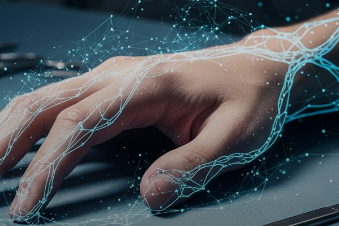
We are drowning in step counts and sleep scores. Every wristband promises optimization, yet few deliver meaningful, coherent clinical change. For years, the digital health conversation centered on data generation—the sheer volume of biometric signals we could capture. But the real tension today isn't data; it’s the liability and trust gap that emerges when we try to automate the most critical medical decisions. Technology is finally capable of integrating into the clinical workflow, but the system is balking at adopting algorithms whose mistakes are measured in human lives, not just misplaced decimal points.
1The Algorithmic Safety Net: When AI Writes the Orders
AI has proven superb at pattern recognition, excelling in fields like radiology and pathology where spotting anomalies is paramount. The current transition, however, is moving AI from spotting a shadow on an image to generating provisional orders or recommending a course of treatment. This shift fundamentally alters the role of the physician. Instead of originating the care plan, the doctor becomes an editor, tasked with verifying the machine's output. This new workflow creates immediate friction. If an LLM misinterprets a complex comorbidity and recommends a contraindicated drug, the liability framework fractures. Is it the doctor who rubber-stamped the suggestion, the hospital that licensed the software, or the company that trained the model on biased data? The industry's current solution is to brand these tools as 'copilots'—a term designed to legally minimize the autonomy of the algorithm while maximizing the adoption rate. But this doesn't solve the core problem: the human responsibility for algorithmic error remains blurry, slowing adoption in mission-critical environments where errors are catastrophic. Until the regulatory bodies and insurers settle who pays for the inevitable mistake, the most powerful AI will remain relegated to administrative tasks and pre-diagnosis triage.
2Passive Monitoring, Active Confusion: The Limits of the Quantified Self
The explosion of clinical-grade wearables—smart rings tracking temperature variability, patches monitoring continuous glucose, consumer ECGs—has empowered individuals by providing previously inaccessible physiological data. This is a revolution in personal awareness, but it’s an administrative nightmare for primary care. An individual can now walk into an annual physical with 90 days of continuous, granular heart rate variability and sleep phase data. Who pays the physician to spend an hour sifting through this firehose of information to identify actionable insights? Most doctors, already pressed for time, dismiss the data unless it flags an acute, immediate problem. The system rewards fifteen-minute office visits focused on current symptoms, not proactive data mining. This creates a critical disconnect: consumers pay high prices for personalized monitoring, yet the conventional healthcare infrastructure is neither equipped nor reimbursed to process it. The data is rich, but the infrastructure to turn it into proactive, preventative medicine remains profoundly flimsy. We have excellent data capture; we lack the infrastructure for integrated, clinical data utilization.
3The Telemedicine Hangover: Rebuilding Trust in Digital Walls
Telemedicine was the savior of 2020, spiking out of necessity. Today, it has matured, settling into a specific, less ubiquitous niche. It excels at mental health support, routine prescription refills, and follow-up consultations. But the industry is facing a significant hangover: the quality of care versus convenience debate. Cheap, asynchronous care, often marketed via direct-to-consumer models, risks commoditizing and ultimately degrading the critical doctor-patient relationship. Furthermore, the barrier of state-by-state licensing remains an enormous hurdle, preventing true scaling and efficiency for providers. The friction point is the physical exam. While remote diagnostics improve yearly, the inability to palpate, auscultate, or simply observe gait limits comprehensive care. The future isn't pure virtual care; it is high-touch specialists embracing hybrid models. These models use digital tools for efficient intake, monitoring, and communication, reserving the valuable face-to-face interaction for necessary physical assessment and complex therapeutic discussions. Without this hybrid maturity, telehealth risks being relegated to a convenient, but clinically shallow, stopgap.
The Bottom Line
The tectonic plates are shifting from paying for services to paying for outcomes, and those outcomes are increasingly measured by the biometric data generated by our own devices. This puts the onus of continuous health management squarely onto the user, not just the provider. The next five years will be defined not by who builds the best new sensor or algorithm, but by which companies can successfully integrate complex data into existing clinical workflows while taking on the inherent legal and ethical responsibility. If digital health cannot move past the 'copilot' branding and prove that tech makes us measurably healthier—not just perpetually tracked—then this revolution will remain a highly profitable, yet ultimately inaccessible, niche.